
PRODUCTS AND SOLUTIONS
One of the most effective methods for eliminating the risk of insect damage to stored goods is the use of metal phosphides. Our products are based on decades of experience and expertise; they are reliable, effective, and approved for use with nearly all types of stored goods. Our solutions ensure the highest level of safety and maximum performance under all storage conditions.
Why Use Phosphine for Treatment?
a {
text-decoration: none;
color: #464feb;
}
tr th, tr td {
border: 1px solid #e6e6e6;
}
tr th {
background-color: #f5f5f5;
}
In integrated inventory protection, preventive and non-chemical measures are often insufficient in practice to ensure complete protection.
In particular, the hidden life stages of stored-product pests elude physical control methods and can lead to renewed infestations. Technical, economic, and structural limitations also often prevent the consistent use of alternative methods such as cooling or controlled atmospheres.
Phosphine offers a decisive advantage here as a curative measure, as it penetrates all areas of stored goods and effectively targets all stages of development. This enables reliable treatment of acute infestations, even under complex storage conditions.
For this reason, phosphine remains an indispensable component of a comprehensive and practical food storage protection strategy.



Benefits at a Glance
How the Products Work
a {
text-decoration: none;
color: #464feb;
}
tr th, tr td {
border: 1px solid #e6e6e6;
}
tr th {
background-color: #f5f5f5;
}
Metal phosphides, such as aluminum or magnesium phosphide, gradually release phosphine upon contact with moisture in the air. This reaction begins as soon as the product is applied, for example, in silos or in stored goods. The rate of phosphine release depends on temperature and humidity.
The phosphine that is produced spreads evenly throughout the stored grain and penetrates even hard-to-reach areas. This allows it to reach pests not only on the surface but also inside the grains or in deeper layers. As a result, all stages of development can be effectively controlled.
Areas of Application
Grain Storage
Protection Against Storage Pests in Silos and Warehouses
Food Industry
Processing of raw materials such as nuts, cocoa, coffee, tea, and spices.
Export and Import
Container fumigation to ensure freedom from pests in accordance with international standards.
Packaged Goods
Ensuring quality and hygiene during storage.
Effective stock protection with hydrogen phosphide
Patented since 1934 - to protect your goods
Our Phosphine Product Portfolio
Phostoxin®/Magtoxin®
Aluminum or magnesium phosphide formulations in tablet or pellet form with controlled phosphine release.
A robust formulation designed for direct incorporation into bulk materials, providing uniform gas release throughout the treatment period.

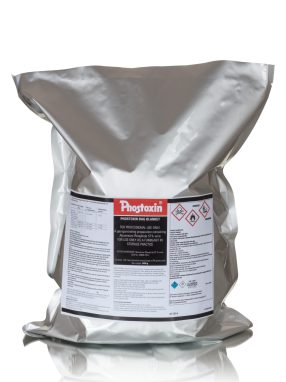
Phostoxin® Bags
Pre-made bags for residue-free use in sensitive applications.
A special type of paper enables phosphine development while also allowing for easy removal of the reaction residues.
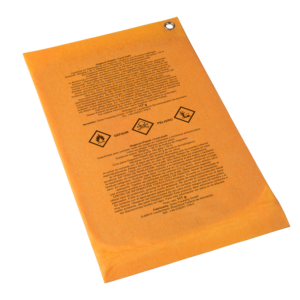
Degesch® Plate/Strip
A formulation based on magnesium phosphide in which the phosphide matrix is bound in a plate-like form.
Flexible use thanks to its flat design or via the hanging loop, either between or above the stored goods.
On the Topic of Safety
a {
text-decoration: none;
color: #464feb;
}
tr th, tr td {
border: 1px solid #e6e6e6;
}
tr th {
background-color: #f5f5f5;
}
When using phosphine for storage protection, user safety plays a central role. Since it is a highly effective yet toxic active ingredient, the use of appropriate safety equipment is essential. Professional solutions, such as concentration monitors and respiratory protection systems, enable reliable monitoring of phosphine concentrations and provide the foundation for safe working conditions.
Modern measuring devices detect even low concentrations early on and help ensure that exposure limits are consistently adhered to. In addition, certified respiratory protection and filtration solutions provide effective personal protection throughout all phases of application—from application to clearance.
Only through a combination of proper application and high-quality safety equipment can phosphine be used efficiently and responsibly. Safety technology is therefore not an afterthought, but an integral part of a professional pest control strategy.
You can find our safety brochure here.
Essential Personal Protective Equipment
Personal Protective Equipment
Portable detectors specifically designed for phosphine, for continuous personal safety monitoring. (visual, auditory, vibration).
Measuring Instruments for Approval & Inspection
Flexible multi-gas analyzers with PH₃ sensors → Ideal for clearance testing, leak detection, and complex applications (e.g., silos, containers).
Practical Short-Term Measurement
Test Tube + Pump
A simple, robust solution for spot-check measurements. Rapid on-site determination of phosphine concentration without electronics.
Respiratory Protection
A full-face mask and PH₃ filter cartridges provide reliable protection against exposure and should be worn whenever working with these products.
Do you have questions about our phosphine products?
Talk to our experts!
Expert in inventory protection
+49 (0) 6201 708-0
Your request will be transmitted in encrypted form.
For more information, please refer to the Privacy Policy.
